Hedge Cutting in Late Autumn: When to Stop Before Winter Sets In Across Wakefield
Autumn hedge cutting in Wakefield explained. When to cut, what to leave, and how to get your garden ready before the first hard frosts hit West Yorkshire.

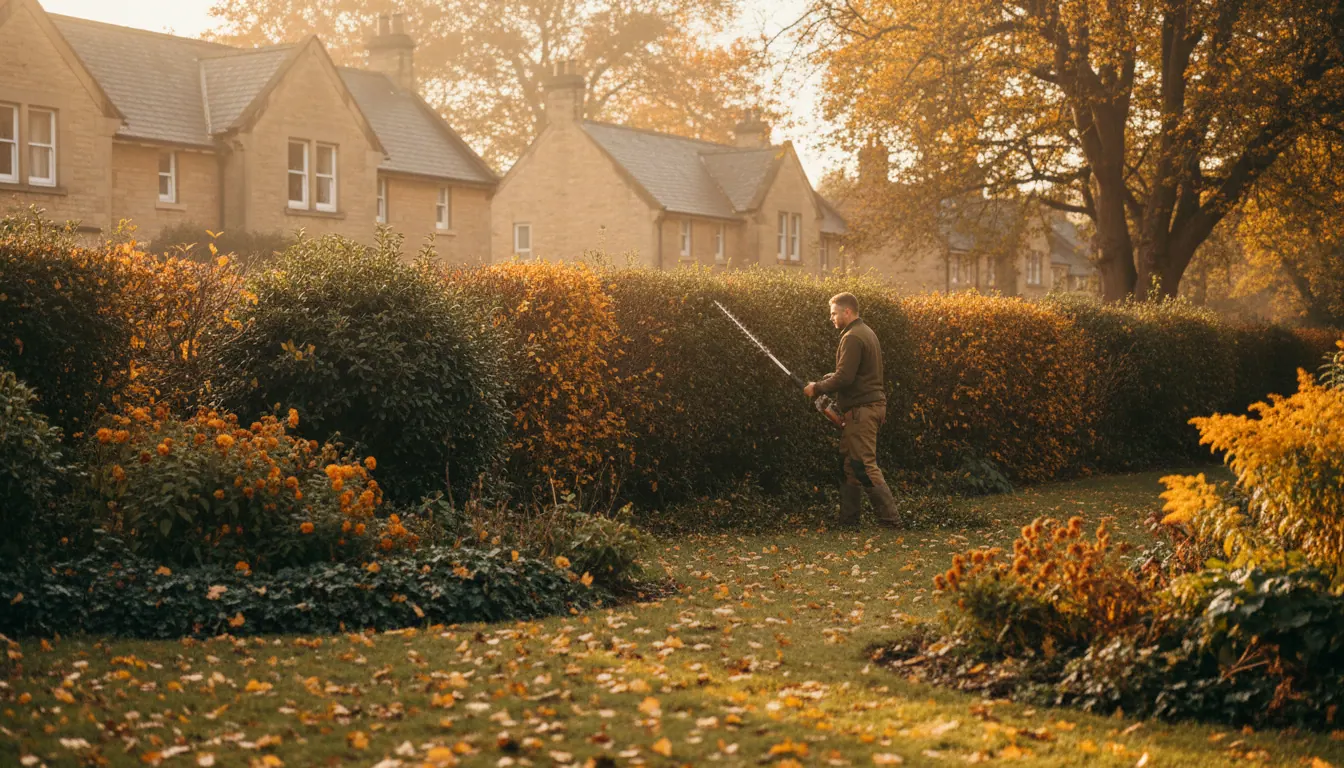
The autumn window for hedge cutting in Wakefield is shorter than most people think
Most hedges in Wakefield and across the wider district, from Pontefract to Normanton, Castleford to Ossett, finish their main flush of growth by late September. That gives you a useful window through October and into early November to carry out a tidy cut before growth stops completely and the cold sets in. Miss that window and you are either cutting into dormant wood in the depths of winter or leaving an untidy, overgrown hedge to sit through to spring.
Getting the timing right matters. Cut too early in the season and a second flush of soft growth can be caught by early frosts. Leave it too late and the job becomes harder, the ground is wetter underfoot, and birds may already be roosting in the thicker hedges. October is generally the sweet spot for most boundary hedges across the Wakefield district.
Which hedges can you cut in autumn, and which should you leave?
Not all hedges behave the same way, and knowing which type you have makes a real difference.
Privet is one of the most common hedge plants across the ex-pit villages and post-war estates of West Yorkshire, from the terraces of Featherstone to the semis of Normanton and Horbury. It grows quickly and can look ragged by late summer. A good trim in October tidies it up and stops it running away over winter. Privet can handle a harder cut if you are trying to reduce its size, and autumn is a reasonable time to do that structural work before the season closes.
Laurel is also very common in this part of West Yorkshire, often used as a thick privacy screen. It is best cut with secateurs or loppers rather than a mechanical hedge trimmer, because shearing the large leaves with a trimmer leaves them with brown, ragged edges. Autumn is fine for a maintenance trim, but avoid cutting laurel back very hard this late in the year. Hard reductions on laurel are better done in spring, when the plant has the energy to recover.
Leylandii grows fast and can get out of hand quickly. A maintenance trim in autumn keeps it in check. If yours has grown significantly taller or wider than you want, it is worth getting that looked at sooner rather than later. Leylandii that has been left for several years can be difficult to bring back without causing bare patches.
Beech and hornbeam hold their dead leaves through winter, which is actually one of their best features for privacy screens. They are best trimmed in late summer or early autumn, so if you have missed that window, a light tidy in October is still fine. Avoid heavy reductions this late.
A word on nesting birds
Before any hedge cutting, check for birds. The main nesting season runs from March through to August, but some species nest late, and in a mild autumn you can occasionally find active nests in dense hedges through September and into October. Have a look before you start. If you find an active nest with eggs or chicks, leave that section alone until the birds have gone. It is a legal requirement, not just good practice.
What else should Wakefield gardens tackle in autumn?
Hedge cutting is often just one part of a bigger autumn tidy-up. If you are already out in the garden in October, it makes sense to look at the wider picture.
Lawn care. Lawns across the Wakefield district, particularly on the heavier clay soils around Normanton, Castleford and parts of Wakefield itself, can suffer badly over winter if they go into it in poor condition. Autumn is a good time to aerate compacted areas (a garden fork pushed in at intervals works for small patches) and to scarify out the thatch if the lawn has built up a thick layer. A late autumn feed with a low-nitrogen, high-potassium fertiliser helps roots strengthen before the cold. Avoid feeding after mid-October as growth slows and the feed will not be taken up properly.
Borders and beds. Cut back spent perennials, remove annual weeds before they set seed, and clear fallen leaves from beds where they might harbour slugs and disease over winter. A layer of well-rotted compost or bark mulch over bare soil helps protect roots and improves the soil structure, which is especially useful on the heavier soils common across this part of West Yorkshire.
Garden clearance. Autumn is the most popular time of year for one-off garden clear-ups. We see a lot of this across Wakefield, Pontefract and Castleford: gardens that have had a busy summer and are now overgrown, with brambles pushing through, ivy taking over fences, and borders that have run to seed. A thorough clearance now sets the garden up for a much easier spring.
"cleared our very overgrown gardens very happy with the service very hardworking polite team nothing was to much for them, we would definitely recommend for any gardening work you require" , Trevour Bowden
That kind of job, clearing a garden that has got ahead of itself, is one of the most common requests we get in autumn. It is not just about tidiness. Clearing brambles, ivy and overgrown shrubs before winter means you are not trying to tackle them when the ground is frozen and the days are short.
Autumn fencing checks: worth doing while you are out there
Once the leaves are off the trees and hedges are trimmed back, you get a much clearer view of your fencing. Autumn is a good time to check for posts that have shifted, panels that have rotted at the base, or fixings that have worked loose. Winter storms put pressure on fencing, and a panel that is already weak is unlikely to survive a January gale. If you spot problems now, getting them sorted before Christmas is much more straightforward than dealing with an emergency repair in February.
We carry out fencing work across Wakefield, Pontefract, Castleford and the surrounding towns, from replacing individual panels to full fence installations.
When to call us in rather than doing it yourself
Some hedge cutting is well within the reach of a confident gardener with the right tools. A small, low privet hedge at the front of a terrace in Featherstone or a compact garden in Ossett is very manageable with a decent pair of hand shears or a light electric trimmer.
But there are situations where it makes sense to get professional help:
- The hedge is taller than you can safely reach from the ground
- You need a significant size reduction, not just a maintenance trim
- The hedge runs along a boundary and needs to look right on both sides
- You do not have the means to remove the cuttings
- The garden has been neglected and the hedge is mixed in with brambles, ivy or self-seeded trees
We cover hedge cutting across Wakefield and the wider district, including Pontefract, Castleford, Normanton, Featherstone, Ossett and Horbury. We bring our own equipment and take away all the cuttings, so you are not left with a pile of green waste to deal with.
Regular maintenance vs a one-off autumn tidy
Some customers prefer a one-off visit in autumn to bring everything back under control. Others find it easier to have us visit regularly through the year so the garden never gets to that point. Both approaches work, and the right one depends on your garden and how much time you have.
For gardens on the larger post-war estates around Wakefield and Normanton, or the longer rear gardens common in Castleford's older streets, regular garden maintenance visits through spring and summer mean the autumn tidy is much lighter work. For smaller terraced gardens, a couple of visits a year can be enough.
We also carry out commercial garden maintenance for businesses, landlords and managers of communal grounds across West Yorkshire, keeping shared spaces tidy through the year.
Frequently asked questions
When is the last safe time to cut a hedge in Wakefield before winter? For most common hedge types, including privet and Leylandii, early November is about the latest you would want to carry out a full trim in West Yorkshire. After that, growth has stopped and the plants are dormant. A cut in dormancy is not harmful, but the results will not look tidy until spring growth comes through. October is the practical sweet spot.
Can I cut my laurel hedge hard back in autumn? It is better to avoid hard reductions on laurel in autumn. A maintenance trim is fine, but if you need to reduce the size significantly, spring is the better time. Laurel cut back hard in autumn has less time to recover before winter, which can leave bare patches that take a long time to fill in.
Do I need to check for nesting birds before cutting in October? Yes, always check before cutting. The main nesting season is March to August, but some birds nest later in mild years, and roosting birds can be disturbed even outside nesting season. A quick look through the hedge before you start takes two minutes and could save a nest.
My hedge runs along a boundary with my neighbour's property. Do I need their permission to cut it? You are generally entitled to cut back branches and growth that overhangs your side of the boundary, up to the boundary line. You cannot cut on your neighbour's side without their agreement. If the hedge is a shared boundary feature, it is worth having a conversation with your neighbour before doing any significant work. For any uncertainty, your local council can advise on hedge disputes.
Autumn is a short window, and the jobs do stack up. If you want a hand with hedge cutting, a garden clearance, or a full autumn tidy anywhere across the Wakefield district, get in touch with us and we will let you know what we can do. You can also call us on 07347 572509, Monday to Friday, 9am to 6pm.