What gravelling and pathway work covers
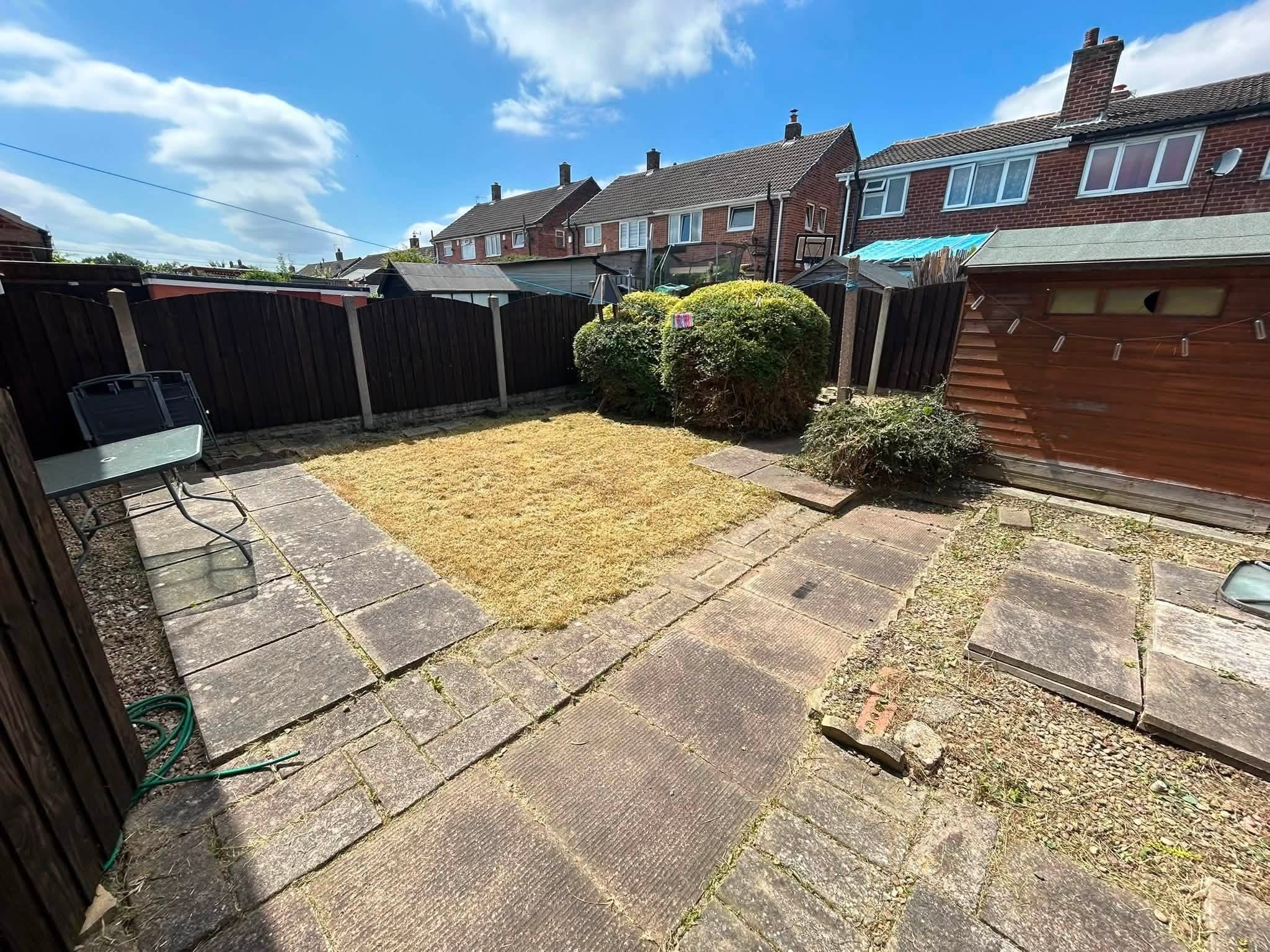
Gravel and good paths are two of the simplest ways to make a garden easier to live with. A gravel area can replace a patch of lawn that never grows properly, a bare side return or a front garden that is a chore to keep tidy. A well-placed path gets you from the back door to the shed, the washing line or the gate without wearing a muddy track across the grass.
Affordable Gardens & Landscapes lays gravel areas, gravel paths and gravel borders, and builds garden pathways in materials such as Indian stone and block paving. This work is often part of a bigger landscaping and garden makeover, and a path is the natural partner to a new patio in Indian stone, but it works just as well as a job on its own.
Choosing the right gravel and path
There is a lot of choice, and the right material depends on how the area will be used. Some general pointers:
- Angular chippings or round pea gravel. Angular stone tends to lock together and feels firmer underfoot, which suits paths and areas you walk on. Rounded pea gravel looks soft and natural but shifts around more, so it often suits borders better than busy paths.
- Size. Medium-sized gravel is a common choice for paths and general areas. Very small stones get carried into the house on shoes, and very large ones can be awkward to walk on.
- Colour. Buff, golden, grey, slate and mixed tones are all available, and it is worth choosing one that suits the house and any paving nearby.
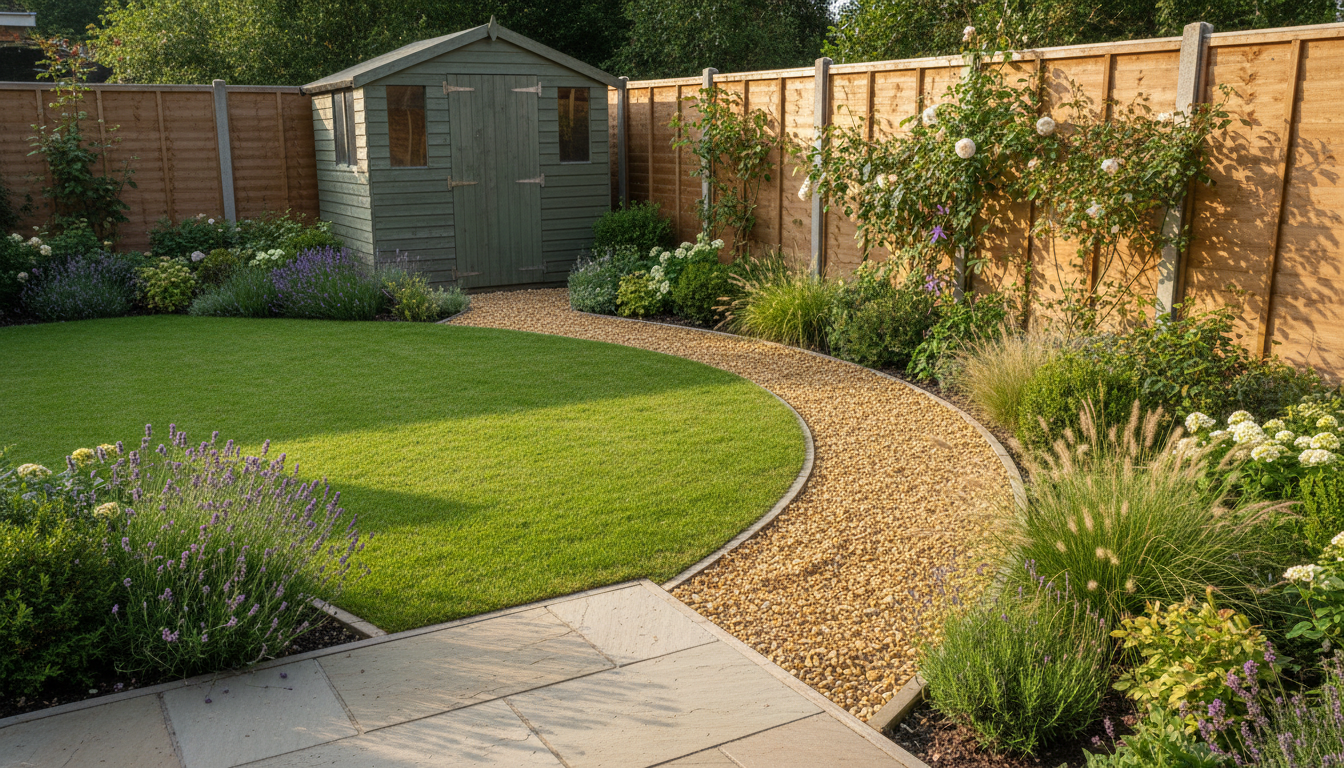
- Edging. Timber, metal, brick or stone edging keeps gravel where it belongs and gives a crisp line against lawns and borders.
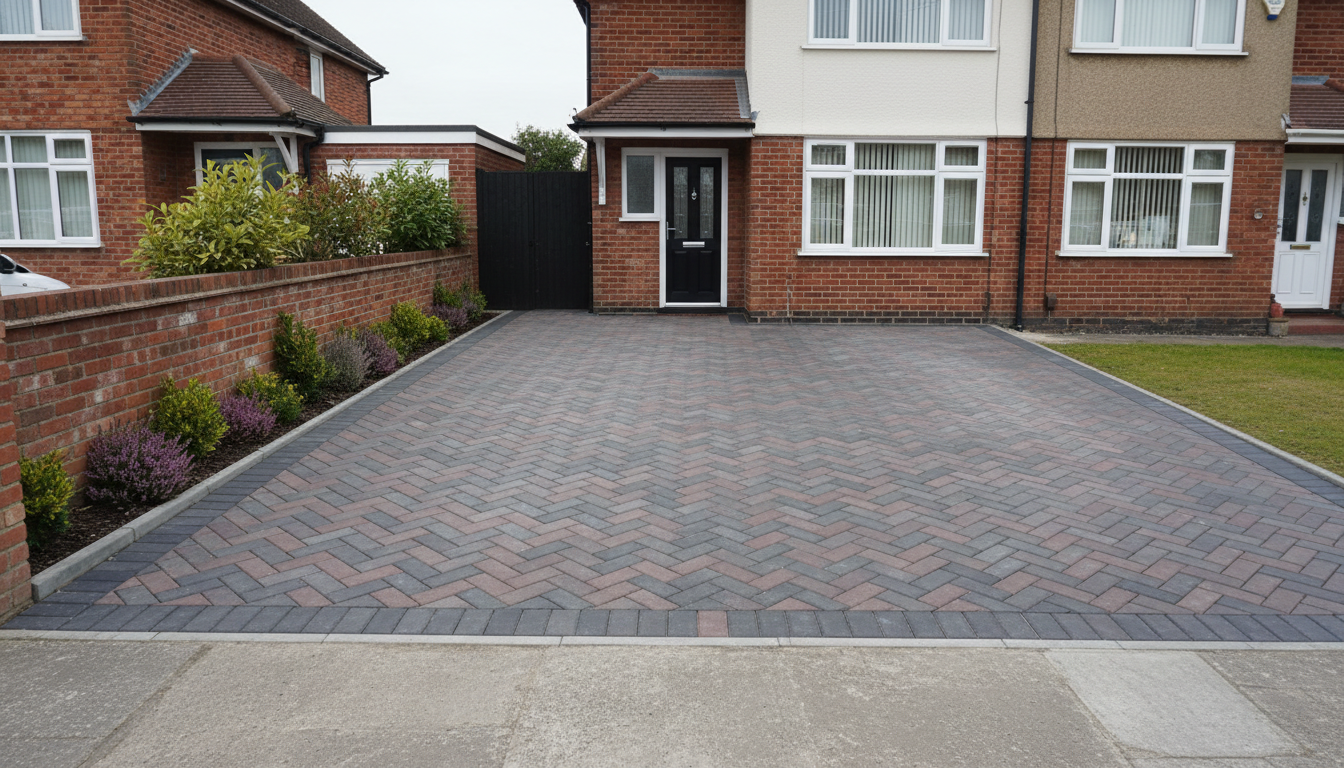
- Solid paths. For main routes, prams, wheelchairs or bins, a solid path in stone or block paving is often better than loose gravel.
Gravel has practical advantages beyond its looks. It drains freely, so it can be a good answer for a spot where water sits on a struggling lawn, and the crunch underfoot is something many people like near a side gate or back door. It is also easy to top up, extend or reshape later if the garden changes.
Signs a gravel area or path needs work
- Weeds are growing through the gravel because there is no membrane, or it has failed.
- The gravel has thinned out so the soil or membrane shows through.
- Gravel has spread onto the lawn, the drive or the pavement.
- Everyone takes the same route across the lawn, leaving a worn strip.
- An old path is uneven, cracked or a trip hazard.
- A side return or front garden has turned into a muddy spot for the bins.
How the job runs, step by step
- Talk it through. Call 07347 572509 and tell us what the area is and how you want to use it.
- A look and a quote. We look at the space, the levels and the drainage, talk through materials and send you a quote.
- Clearing and digging out. The area is cleared of weeds, turf or old paving and dug out to the right depth.
- Base and edging. Paths get a firm compacted base, and edging is fixed to hold everything in place.
- Membrane. A weed membrane goes down under gravel areas to cut down on weeds coming through from below.
- Laying the surface. Gravel is spread and levelled to an even depth, or the stone or blocks for a solid path are laid.
- Tidying up. The area is raked and swept and the waste is cleared away.
On a gravel path, the edging makes the biggest difference to how long it keeps looking good. Without it, gravel creeps into the lawn and the borders and the path slowly loses its shape. Firm edging set at the right height holds the gravel in place and gives the mower a clean line to run along.
When to lay gravel and paths
Gravel can be laid at almost any time of year when the ground is not frozen or waterlogged, which makes it a good winter or early spring job before the garden gets busy. Solid paths bedded on mortar follow the same rules as patios: avoid frost and heavy rain while the mortar sets. If gravel is replacing a lawn, lifting the old turf properly first stops grass growing back through.
What affects the scope
- the size of the area and the length and width of any paths
- the material chosen, whether gravel, Indian stone, block paving or a mix
- what has to come out first, such as turf, old slabs or concrete
- the type of edging and the shape, as curves take more cutting than straight lines
- levels, steps and drainage
- access for bringing in materials and taking waste away
Family run, fully insured, and where we work
Affordable Gardens & Landscapes is a family run business based in Knottingley, and we are fully insured. We lay gravel and build garden paths across Normanton, Wakefield, Castleford, Pontefract, Featherstone, Knottingley, Outwood, Altofts, Stanley, Rothwell, Ossett and Horbury.
Call 07347 572509, Monday to Friday between 9am and 6pm, or send us a message with a photo of the area and a few words on what you would like, and we will send you a quote.