Wakefield is really a ring of former villages around a city centre that sits on a low hill above the north bank of the River Calder. Alverthorpe, Thornes, Sandal, Agbrigg, Belle Vue, Lupset, Flanshaw and Portobello all grew into it, and each brings its own kind of house and garden. That matters for garden clearance, because clearing a slim yard behind a Victorian terrace is a very different job from cutting back a family garden that has been left for three summers on one of the council-built estates.
Affordable Gardens & Landscapes is a family run, fully insured business based in Knottingley, and we cover the whole of Wakefield for clearances and tidy ups. The job is easy to describe: overgrown growth cut back, the garden cleared, and the garden waste taken away, so you are left with a space you can use or start again on.
Narrow terraced yards in Agbrigg and Belle Vue
Agbrigg expanded mainly in the Victorian era, and most of the suburb is terraced housing either side of Agbrigg Road, with Belle Vue right next door. Behind houses like these the outdoor space is often a slim yard or a short strip of garden with walls or fences on both sides, and sometimes the only way in is through the house.
On a clearance like that, access shapes everything. Cut material has to be bagged and carried out by hand, so before we quote we want to know where a van can stop, whether a back gate opens onto a lane, and how far it is from the yard to the road. Brambles, ivy, nettles and long grass are the usual culprits once a small yard is left alone, and in a tight space they are cut back, pulled out at the roots where they can be, and the paving or path underneath swept clear.
Family gardens on the council-built estates
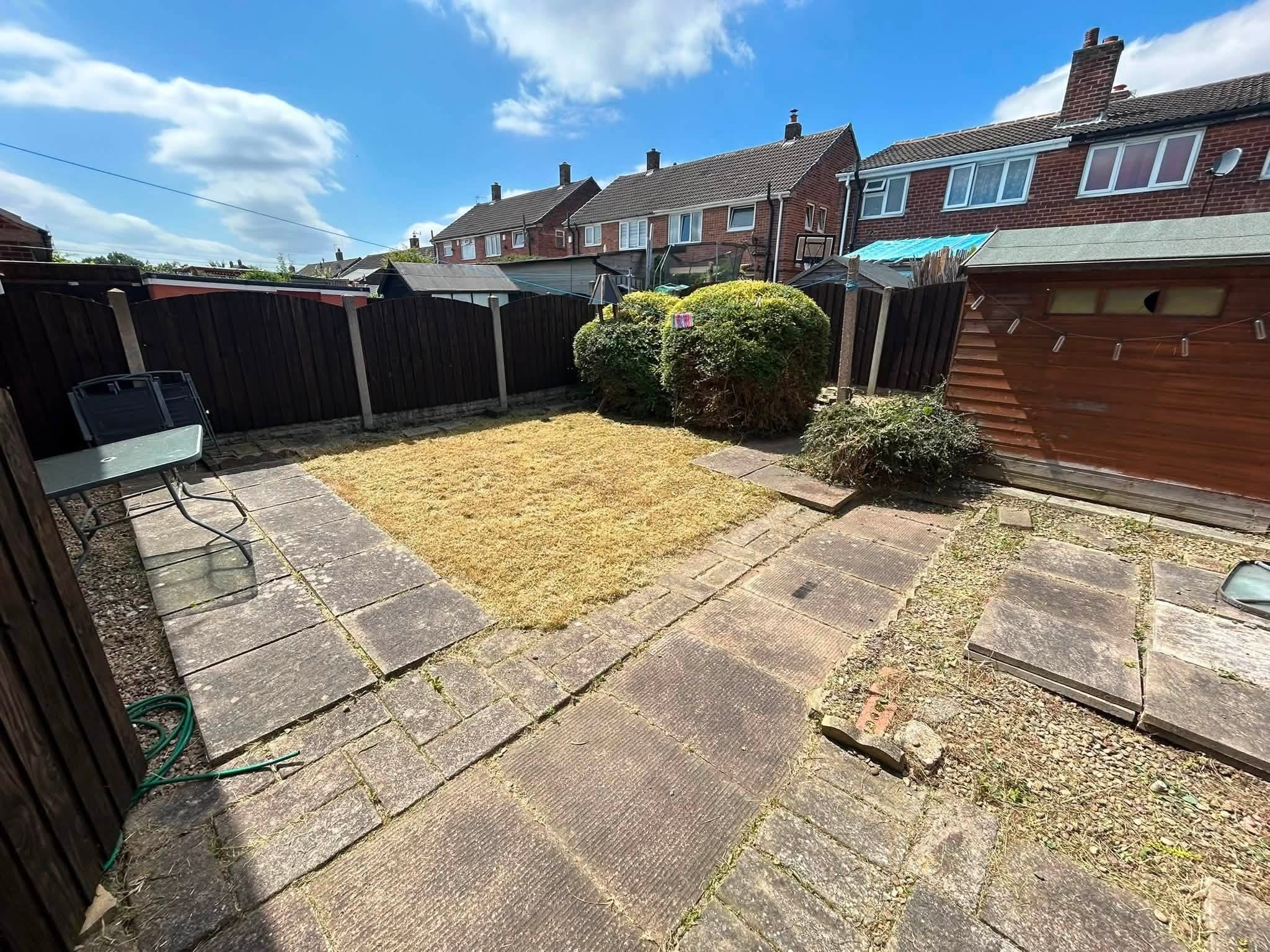
Wakefield Council began building estates after the First World War. Portobello was the first and Lupset is the largest, with Flanshaw, Plumpton, Peacock, Eastmoor and Kettlethorpe making up the seven. If your garden is on one of these estates and it has gone past the point of a quick weekend tidy, a clearance usually works from the house outwards. We cut the grass down in stages so the ground can be seen, take hedges back from paths and boundaries, clear the beds and borders, then deal with whatever has taken over the far end.
Bigger gardens produce a surprising volume of waste. It goes in the van and leaves with us, so there is no heap left by the back fence and no bin waiting weeks to be emptied.
Older streets, conservation areas and trees
North of the centre, St John's Church and the Georgian town houses around it went up in the late 1700s, and the early 19th century red brick terraces on St John's Square still have their wrought-iron railings. St John's is one of several conservation areas in the city, alongside places such as Wentworth Terrace, South Parade and Wood Street, while Sandal Castle has its own.
Wakefield Council's guidance is clear that a tree in a conservation area needs the council's consent before it is felled or pruned, and a tree with a preservation order is protected wherever it stands. So a clearance on these streets works around established trees. We take out the brambles, weeds and scrub underneath and leave the tree itself alone. If you are not sure whether a tree on your plot is protected, the council's tree preservation order pages are the place to check.
When to book, and what to tell us
Autumn and winter suit a big clearance. Growth has died back, the shape of the garden is easier to see, and birds are no longer nesting. You can book a clearance in spring or summer too, but thick hedges and shrubs often hold nests then. The law makes it an offence to intentionally take, damage or destroy a wild bird's nest while it is being used or built, so in the breeding season we check dense growth before cutting into it, and any part with an active nest waits.
Wakefield gets roughly 827 mm of rain in an average year, and a wet winter leaves heavy, matted growth that takes longer to cut and weighs more to shift. That is worth knowing if the garden has been left through a couple of damp winters. When you call, tell us roughly how big the garden is, how long it has been left, how we get in, and anything you want to keep, such as a favourite shrub or a path you think is hidden under the grass.
After the clearance
Once the garden is back, the easiest way to keep it there is regular care. Our regular garden maintenance in Wakefield picks up where a clearance stops, with mowing, edging, hedge cutting and weeding on a schedule that suits you. If clearing the ground shows you want a fresh start, with new turf, a gravel area or a patio, landscaping in Wakefield is the next step.
Sof Mcg summed up a clearance well in a Facebook review: "They cut everything back and cleared all of the garden waste away."
You can read more about how our garden clearance and tidy ups work, or see everything we cover on the Wakefield area page. To arrange a visit, call 07347 572509, Monday to Friday between 9am and 6pm, and ask for a quote.